1. Dubai Desert
  2. Stargazing in the Dubai desert

In the dunes

Stargazing in the Dubai desert

Telescope sessions 20–60 min · best around new moon · November to March

  • WhenAfter dark, ≈ 19:00–23:00
  • Length20–60 min of telescope time
  • WhereDDCR · Lahbab · Mleiha
  • SeasonBest November to March

Compare and book

10 listings on Headout and GetYourGuide, prices refreshed daily.

Which one fits you

  • A first look through a telescope on a normal safari eveningAn evening safari with stargazing included
  • You want a camel ride at sunset and the sky afterA camel trek with camp dinner and stargazing
  • Dinner is part of the planA desert dinner with a stargazing session
  • You want the darkest hours, after the camp lights go offAn overnight camp with a telescope
  • Sandboarding first, stars laterA Mleiha safari with sandboarding, stargazing and dinner
Time of day

Short answer

You can see far more stars in the desert than in the city, but on most safaris stargazing is a short telescope stop at a busy camp. For a real session, pick a night near new moon and go to Mleiha in Sharjah or a quiet camp inside the conservation reserve.

Official facts

From the official source, quoted word for word.

Mleiha stargazing
Guided evenings with stars and planetsEnjoy a beautiful evening exploring the stars and planets with one of our experienced guides.mleihanationalpark.com · checked 12 November 2026
Mleiha programmes
Stargazing runs all year, not only on event nightsMleiha also offers year-round stargazing programmes, including mobile astronomy sessions for schools, private groups, and partners across the region.sharjah24.ae · checked 12 November 2026
Mleiha telescopes
Computerised telescopes for planets and deep-sky objectsEquipped with advanced high-resolution computerised telescopes, guests can observe planets and deep-sky objects with exceptional clarity.sharjah24.ae · checked 12 November 2026

How the day runs

  1. Private pickup from Dubai; the window runs 17:00–18:30 by season

  2. 60-minute private nature drive in a vintage Land Rover in the Dubai Desert Conservation Reserve

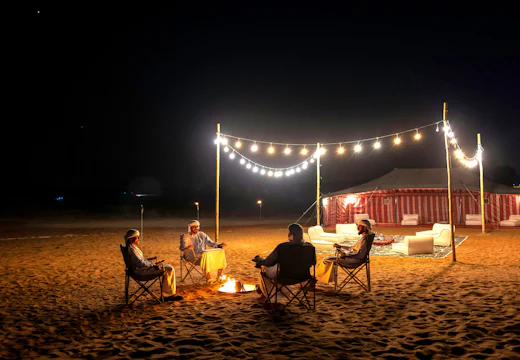
  3. Night walk with torches to look for sandfish and scorpions, then coffee and dates at a torch-lit camp

  4. Three-course dinner

  5. Telescope session on the moon, planets and constellations; an astronomy talk instead if clouds cover the sky

  6. Return to your hotel between 22:00 and 23:30

Typical timings from uae.platinum-heritage.com. Pickup times vary by hotel area and season.

Where the sky is dark enough

Dubai's glow reaches far into the desert, so distance and camp lights decide what you see. Most evening safaris stop at large camps in Lahbab or Al Awir, where floodlights and the stage stay on until the shows end. You will see the brightest stars and planets, but not much more until the camp goes dark.

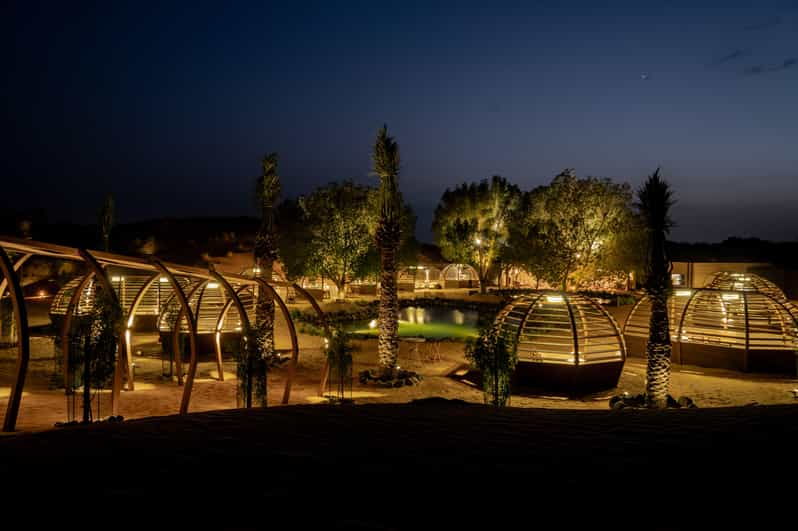
Inside the Dubai Desert Conservation Reserve, camps are smaller and the lighting is softer. Some heritage overnights switch off camp power from 23:00 to 06:00, which is when the sky is at its best.

Mleiha in Sharjah, about 75 km east of Dubai and roughly an hour by car, is the main astronomy venue near the city. It is run as a national park with its own guides and telescopes, and its programmes do not depend on a safari. The darkest place in the country is reported to be Al Quaa in Abu Dhabi, near the Saudi border; it is a long drive, and volunteers from the Dubai Astronomy Group organise trips there.

What a telescope session includes

Format Where Telescope time Who leads it Small print
Stargazing on a safari or overnight Lahbab camps Short look through an on-site telescope after dinner Camp staff Shows and lights nearby; often listed as "stargazing" with no telescope
Mleiha guided stargazing Mleiha, Sharjah Up to 1 hour Expert guide, English only Up to 50 guests at once, minimum 2 per booking, transfers extra
Mleiha Panoramic Lounge Mleiha 20-minute guided session Expert guide Evening of up to 5 hours, bonfire, bring your own food to grill
Mleiha Space Camp Mleiha Up to 30 minutes Expert guide 2-hour programme with workshops, ages 5 and over
Private Night Safari and Astronomy DDCR Telescope session with a talk Platinum Heritage From AED 2,990 per private vehicle (operator, November 2026)

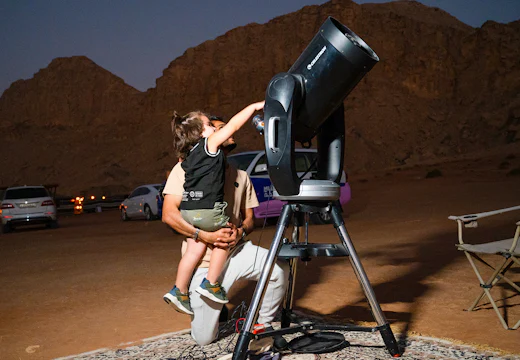
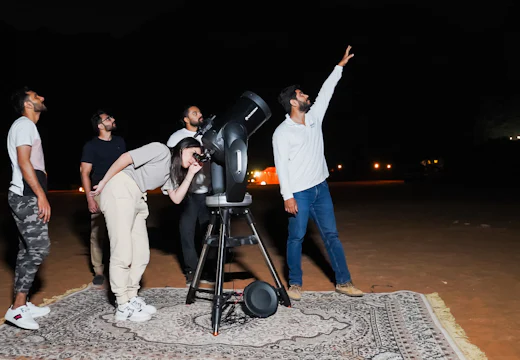
A good session points the telescope at the moon (if it is up) and at Jupiter, Saturn or Mars when they are visible, while the guide explains the constellations overhead. Expect to share the telescope and take turns for each target. A 20-minute slot at a busy camp means a few looks, not an hour of observing.

The moon decides more than the place

A bright moon washes out faint stars wherever you are. Plan for the week around new moon and avoid the days around full moon. New moons this season fall on 9 December, 8 January, 6 February and 8 March; full moons on 24 December, 22 January, 21 February and 22 March (UAE time, from US Naval Observatory data). In mid-December the Geminid meteor shower peaks, and Mleiha announces a Geminids night for 12 or 13 December.

Best months and weather

November to March is the stargazing season in practice. Nights are cool, the reserve camps run their full programmes, and you can sit outside for hours; bring a warm layer, as desert nights in winter get cold (see what to wear). Winter also brings humid nights and some morning fog, so a clear evening is likely but not certain. The bright centre of the Milky Way is up from late spring to early autumn, but summer nights are hot and dust haze is common. Our weather page has the month-by-month picture.

The plain truth behind "stargazing" listings

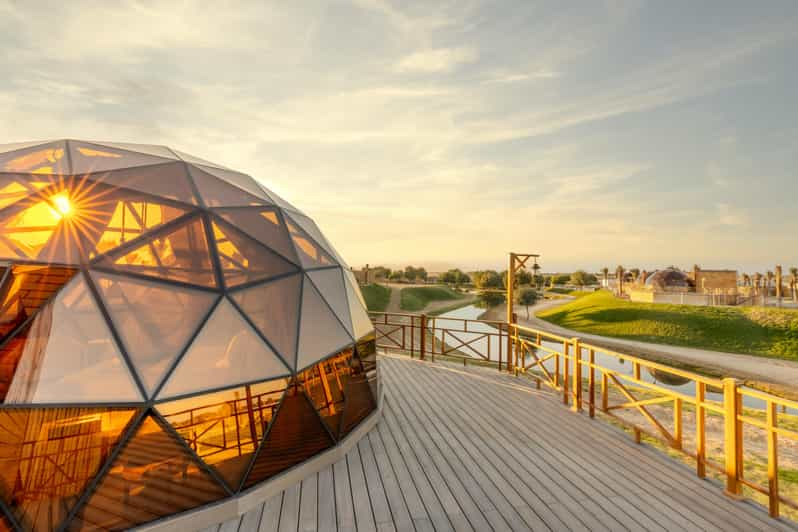
Many evening safaris list stargazing because guests look up after dinner. Check for the words "telescope" and "guide". If a camp offers a telescope, ask when it runs: sessions after the shows end, or on an overnight after the lights dim, are worth more than a quick look during the buffet. For a dedicated evening, Mleiha or a private astronomy safari is the better choice; for a romantic version with a private terrace and fire pit, see glamping.

Questions people ask

Can you see the Milky Way from the Dubai desert?
Faintly, on a moonless night away from the camps, and best from late spring to early autumn when its bright centre is up. For a clear view you need the darkest sites, such as Al Quaa in Abu Dhabi, far from any city glow.
What is the best time of year for stargazing in Dubai?
November to March for comfort: nights are cool and the desert programmes run in full. Choose dates near new moon; summer nights are hot and often hazy with dust.
Is stargazing included in a desert safari?
Some listings include a short telescope session after dinner, usually once the shows end. Check the inclusions: many evening safaris only mention looking at the sky.
What happens if it is cloudy?
The session is shortened or replaced. Platinum Heritage switches to an astronomy talk, and Mleiha's sessions are subject to the weather and may not run when it is cloudy.
How much does a private night safari with astronomy cost?
Platinum Heritage publishes its Private Night Safari and Astronomy from AED 2,990 per private vehicle (checked November 2026), with dinner and an optional overnight.
Is Mleiha stargazing suitable for children?
Yes. The listed sessions let children under five in free, and the Space Camp programme is designed for ages five and up.

Read next

Sources

  1. mleihanationalpark.com — Mleiha stargazing
  2. sharjah24.ae — Mleiha programmes
  3. uae.platinum-heritage.com — Private Night Safari and Astronomy: pickup 17:00–18:30, about five hours, telescope session or talk if cloudy, from AED 2,990 per private vehicle
  4. oceanairtravels.com — Al Khayma overnight: telescope stargazing as camp lights dim
  5. aa.usno.navy.mil — New and full moon dates (converted to UAE time)
  6. wtop.com — Al Quaa as the darkest site in the UAE
  7. gulfnews.com — Milky Way season in the UAE
  8. lonelyplanet.com — Mleiha about 75 km east of Dubai

Prices, ratings and durations: GetYourGuide, Headout, refreshed daily.